Business Formation Lawyers Los Angeles | LLC & Corp
If you are searching for business formation lawyers in Los Angeles, you are likely evaluating how to structure a company in a way that supports growth, protects ownership interests, and reduces unnecessary legal risk from the beginning.
Starting or expanding a business is often an exciting milestone, but it also involves decisions that can shape the company’s future for years to come. The legal structure chosen at the outset affects liability protection, taxation, governance, investor participation, and the company’s long-term flexibility as it evolves.
In case you are new here, we are Madero & Carriles Legal Group, a bilingual and bicultural law firm advising entrepreneurs, business owners, and families in Los Angeles whose professional and financial interests often extend across the United States and Mexico. Many of the matters we handle involve companies operating in cross-border environments, where business structures, ownership arrangements, and long-term planning require coordination across jurisdictions. This perspective allows us to guide clients through the legal decisions involved in forming a business with clarity and strategic foresight.
Business formation is not simply about registering a company. It is about creating a legal framework that supports responsible growth, protects founders, and allows the business to operate with clarity. On this page, we explain how business formation works under California law, the challenges entrepreneurs commonly encounter when structuring a company, and how coordinated legal planning can support businesses operating across borders.
Business formation refers to the legal process of establishing a company under the laws of a specific jurisdiction. This process typically includes selecting the appropriate legal entity, filing formation documents with the state, and creating the foundational legal structure that allows the business to operate.
Business structuring goes further. It involves defining how ownership is organized, how decisions are made within the company, how profits and responsibilities are allocated, and how the business complies with legal and regulatory obligations. These decisions shape the governance and operational stability of the company long after formation.
For entrepreneurs and investors, choosing the appropriate structure is a strategic decision. The legal entity selected affects liability protection, taxation, governance requirements, and the company’s long term flexibility as it grows.
When businesses operate across borders, formation decisions may require additional coordination. Corporate systems in California do not automatically align with corporate frameworks in Mexico. Thoughtful planning can help ensure that business structures support operations in both jurisdictions while reducing legal friction and regulatory complications.
Choosing the appropriate legal entity is often the first major decision entrepreneurs face. Whether a company should operate as a limited liability company, a corporation, or another structure depends on the nature of the business, the ownership model, and the long term vision of the founders.
Liability protection is another key consideration. The legal structure determines the degree to which personal assets are separated from business obligations. Without proper structuring, founders may unknowingly expose themselves to unnecessary risk.
Ownership arrangements also require careful planning when multiple partners or investors are involved. Clearly defining ownership interests, governance rights, and financial participation helps prevent misunderstandings and disputes as the company grows.
For many entrepreneurs, formation decisions must also account for long term expansion. Businesses that anticipate outside investment, international operations, or cross border partnerships benefit from legal structures that support future growth rather than restrict it.
Business formation legal guidance may be especially important when you are starting a new company and want to ensure that the business is properly structured from the beginning. Early decisions regarding entity selection, ownership, and governance often have long-term consequences that are far more difficult to correct later.
You may also benefit from legal planning if you are forming a business with partners. In those situations, clear agreements help define roles, ownership percentages, decision-making authority, and financial expectations before misunderstandings arise.
Entrepreneurs planning to attract investors often require more formal legal structuring as well. Investors typically expect clarity in governance, ownership rights, and internal documentation before committing capital.
Legal guidance may also be important when a business will operate across jurisdictions or maintain cross-border operations. Companies with activities in both the United States and Mexico often benefit from coordinated planning that accounts for how corporate structures function in each country.
Many founders seek legal advice not only because they want to start a company, but because they want to build it on stable legal ground. Thoughtful formation planning provides more than compliance. It creates clarity and flexibility for future growth.
Our approach to business formation begins with understanding the entrepreneur’s objectives, the nature of the business, and the long-term vision for the company. Formation decisions are rarely purely administrative. They affect governance, financial participation, liability exposure, and operational flexibility.
We evaluate the available entity structures under California law and analyze how each option may influence taxation, liability protection, investor participation, and decision-making authority. Once the appropriate structure is identified, we guide clients through the formation process and prepare the legal documentation necessary to establish the company’s governance framework.
For entrepreneurs whose operations or investments extend beyond the United States, formation planning may also require coordination with foreign corporate systems. Our firm regularly advises clients whose businesses operate in both the United States and Mexico. This includes helping clients evaluate the appropriate formation of California entities while also advising, when needed, on the selection and formation of Mexican business entities in coordination with the broader cross-border structure of the business.
Our goal is not simply to establish a company legally. It is to create a structure that supports stability, protects founders from unnecessary risk, and allows the business to grow with clarity over time.
Business formation is not limited to filing paperwork with the state. It is the process of building the legal architecture that governs how a company operates, how decisions are made, how financial interests are structured, and how risk is managed.
As business formation lawyers in Los Angeles, California, we assist entrepreneurs in creating companies that are designed to operate with clarity and long-term stability. Our work often involves guiding founders through the strategic decisions that determine how ownership, governance, and operational authority will function as the company grows.
Because many of the businesses we advise operate across jurisdictions, formation planning frequently includes evaluating how corporate structures interact with foreign legal systems. Coordinating entity structures between the United States and Mexico can help companies operate internationally while maintaining compliance and operational clarity. When appropriate, this may also include advising on the formation of Mexican entities as part of a broader binational business strategy.
Cross border business structuring
Entrepreneurs whose businesses operate internationally often face additional legal considerations related to taxation, regulatory compliance, ownership structure, and operational control.
We advise business owners whose companies have cross-border activities on how to structure their entities in ways that support international operations while maintaining compliance with the legal requirements of each jurisdiction involved. This includes helping clients assess how California entities interact with Mexican corporate structures and, when needed, advising on the selection and formation of Mexican business entities that align with the broader business plan.
Because corporate systems in different countries do not automatically align, thoughtful structuring can help prevent legal friction, reduce operational confusion, and support continuity as the business grows across borders.
Tips & resources for starting a business
Starting a business involves more than launching a product or service. The legal framework chosen at the beginning often shapes the company’s ability to grow, attract investment, and manage risk over time.
Entrepreneurs benefit from carefully evaluating the legal structure of the company before operations begin. The entity selected affects taxation, liability protection, governance requirements, and the company’s flexibility as it expands. Taking time to clarify ownership arrangements among founders is equally important, because clearly documented expectations can reduce the risk of future disputes.
Businesses that anticipate outside investment or cross-border operations often benefit from legal guidance early in the process. Thoughtful planning can help ensure that the company’s structure supports growth rather than requiring significant restructuring later, particularly when operations in both the United States and Mexico may require coordinated entity planning.
Your trusted law firm in Los Angeles, California
Legal guidance for entrepreneurs and growing companies.
At Madero & Carriles Legal Group, we advise entrepreneurs, founders, and business owners who want to build companies with strong legal foundations and long-term stability.
Many of the individuals we represent operate in environments where business activities, family responsibilities, and financial interests intersect across jurisdictions. Our cross-border experience allows us to understand the practical realities faced by entrepreneurs whose operations involve both the United States and Mexico.
This perspective allows us to advise clients not only on forming companies in California, but also, when needed, on the selection and formation of business entities in Mexico as part of a coordinated cross-border legal strategy. Thoughtful planning in this context can help business owners avoid structural conflicts and create greater alignment between operations in both jurisdictions.
Our role is to provide thoughtful legal guidance so that entrepreneurs can focus on building and growing their businesses with confidence.

We provide bilingual immigration, estate planning, and business law services in Los Angeles, across the U.S. and Mexico.
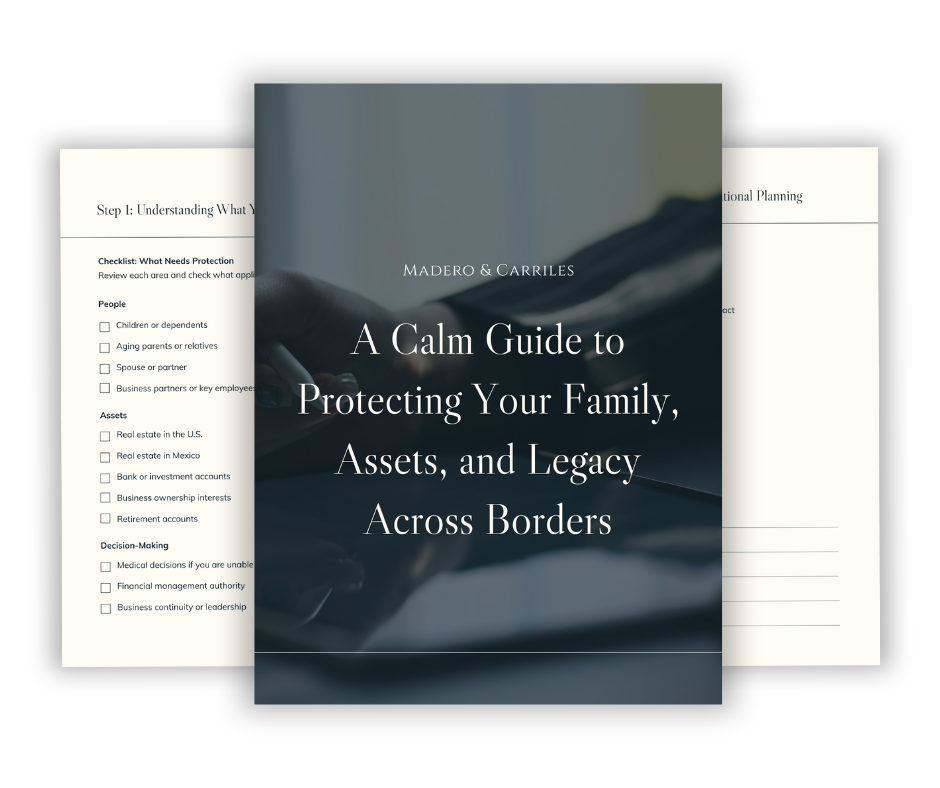
Book a free consultation for your legal matters
Let’s build a legal strategy that supports what matters today and for generations to come.
FAQ
An LLC generally offers greater flexibility in management and taxation, while a corporation usually operates under a more formal governance structure that includes shareholders, directors, and officers. The appropriate structure depends on the nature of the business, the ownership arrangement, the intended tax treatment and the company’s long-term goals, including whether outside investment is anticipated.
Starting a business in California usually involves selecting the appropriate legal entity, filing formation documents with the Secretary of State, and preparing internal governance documents that define how the company will operate. The process may also require additional planning when the company has multiple owners, investor expectations, or cross-border operations.
Different entity types are subject to different tax frameworks, which can affect how profits are reported, how owners are taxed, and how income is distributed. The right structure depends not only on tax treatment, but also on liability protection, governance, and long-term business strategy.
Yes. Foreign entrepreneurs may establish businesses in the United States, although immigration considerations, regulatory obligations, and operational logistics should be evaluated carefully. When a business will operate in both the United States and Mexico, coordinated legal planning can help align entity structure across jurisdictions.
The timeline depends on the jurisdiction and the complexity of the structure. Many California entities can be formed within several weeks once the required documents are prepared and filed, although more sophisticated structures or cross-border coordination may require additional planning time.